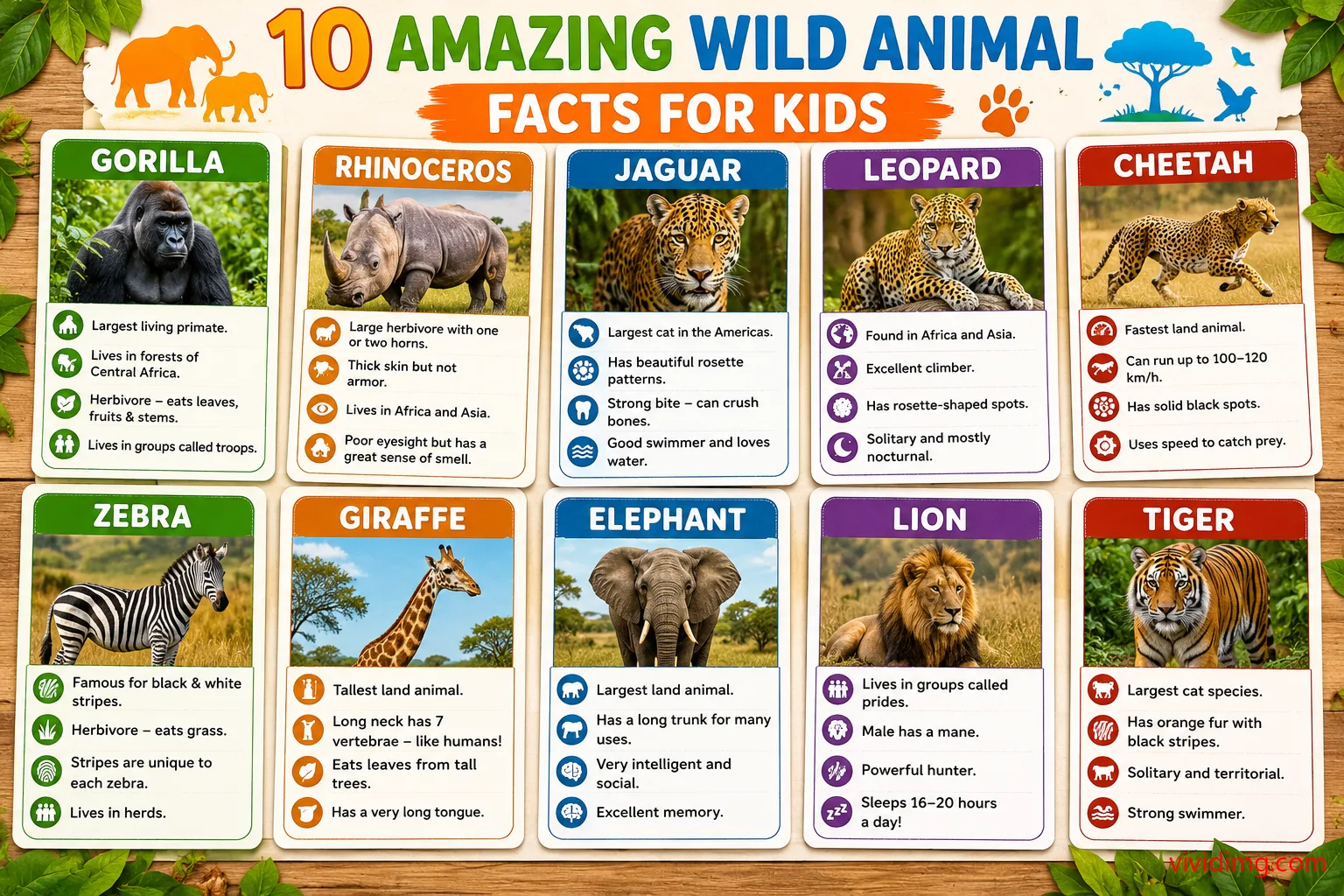
Wild animals have an incredible ability to capture a child's curiosity. A tiger's stripes, a giraffe's extraordinary height, an elephant's trunk or a gorilla's powerful build can quickly turn a simple question into an exciting learning experience. Animal flashcards make that curiosity useful by combining recognizable wildlife with short, memorable information.
This collection brings together 10 educational wild animal flashcards for children. From powerful big cats and enormous herbivores to intelligent primates, each flashcard gives young learners an opportunity to discover an animal's appearance, habitat, diet, behavior and special characteristics.
Parents and teachers can use these animal flashcards for classroom learning, homeschooling, science activities, wildlife projects, vocabulary development or simple question-and-answer sessions. Instead of asking children to memorize a long list of facts, encourage them to observe each animal and discover what makes it different.
1. Gorilla facts for kids
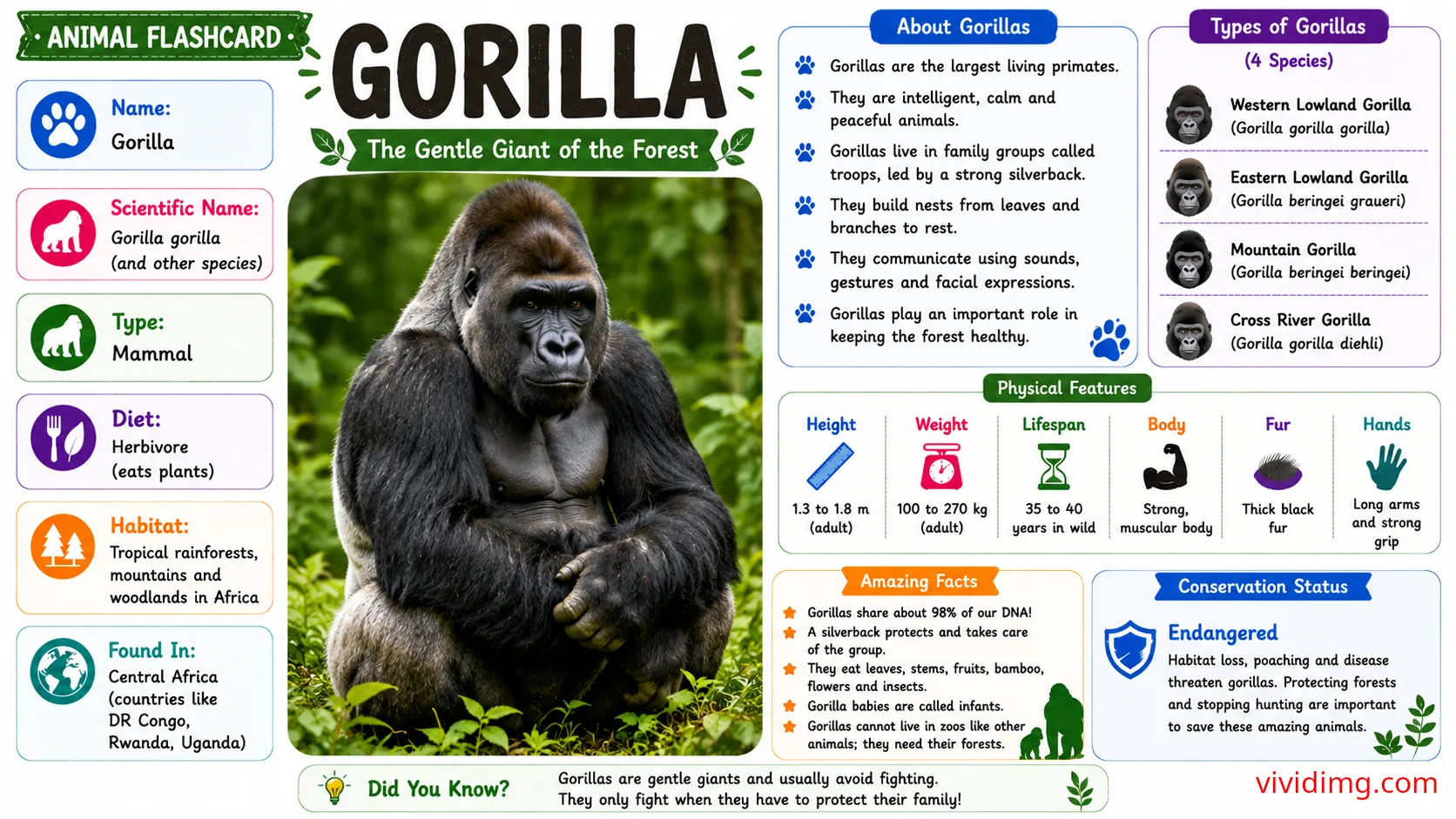
Gorillas are the largest living primates and are closely related to humans. These powerful animals live naturally in the forests of central Africa. Despite their impressive size and strength, gorillas generally spend much of their time eating vegetation, resting and interacting with members of their social group.
Gorillas mainly eat plant material such as leaves, stems, shoots and fruit, although diets vary by species and habitat. They usually live in groups, and an adult male known as a silverback often plays an important role in leading and protecting the group. Gorillas are intelligent animals capable of learning, problem-solving and complex social communication.
2. Rhinoceros facts for kids
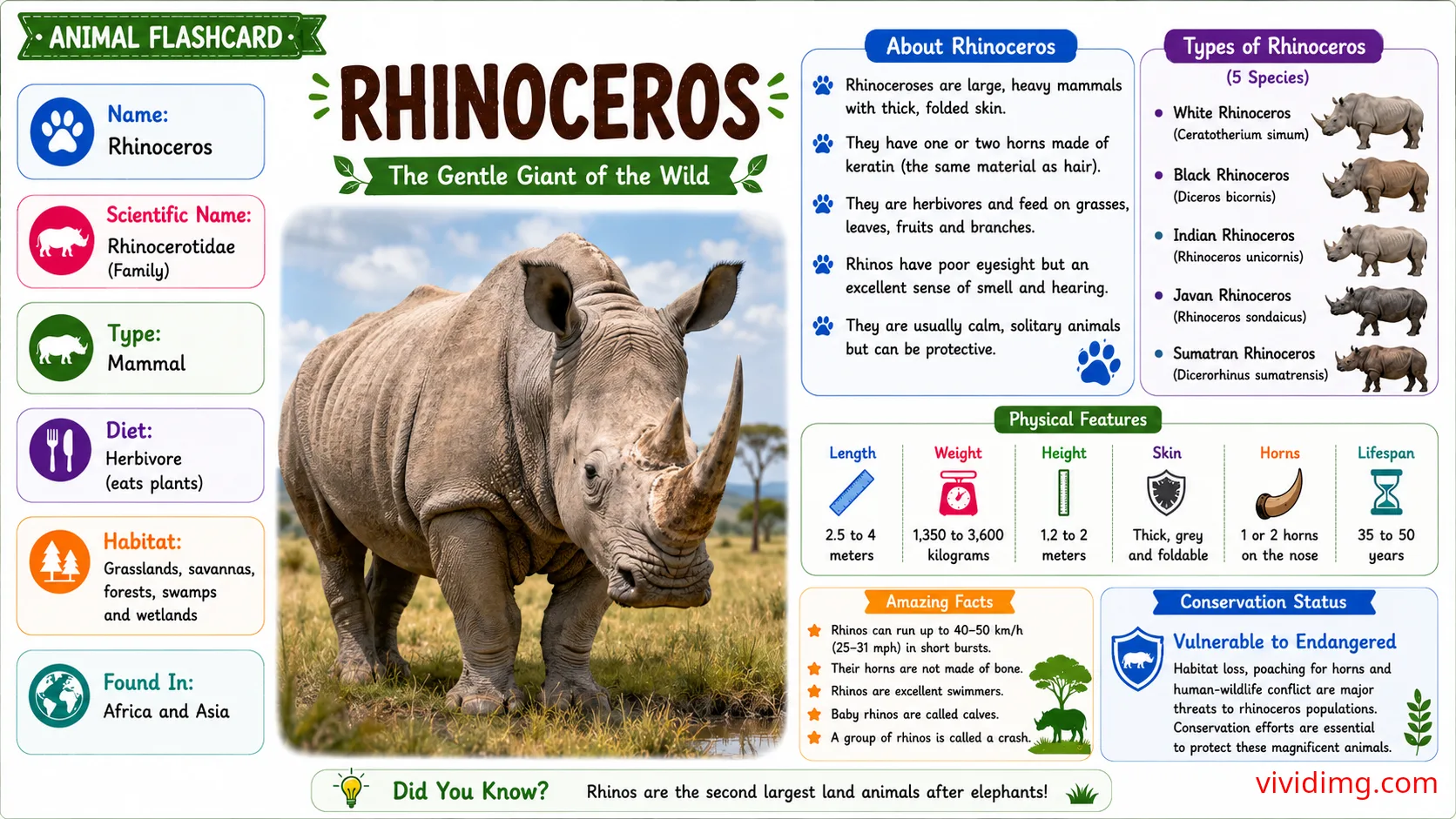
Rhinoceroses are large, powerful herbivorous mammals best known for the horns on their snouts. Five living rhino species are found across parts of Africa and Asia, and their appearance, size and number of horns vary between species.
Although rhinos look heavily armored, their bodies are covered with thick skin rather than a hard shell. They eat plant material such as grasses, leaves, shoots and branches depending on the species. Rhinos have relatively poor eyesight but compensate with strong senses of hearing and smell. Learning about rhinos also provides an opportunity to introduce children to wildlife conservation because several rhinoceros species face serious threats in the wild.
3. Jaguar facts for kids
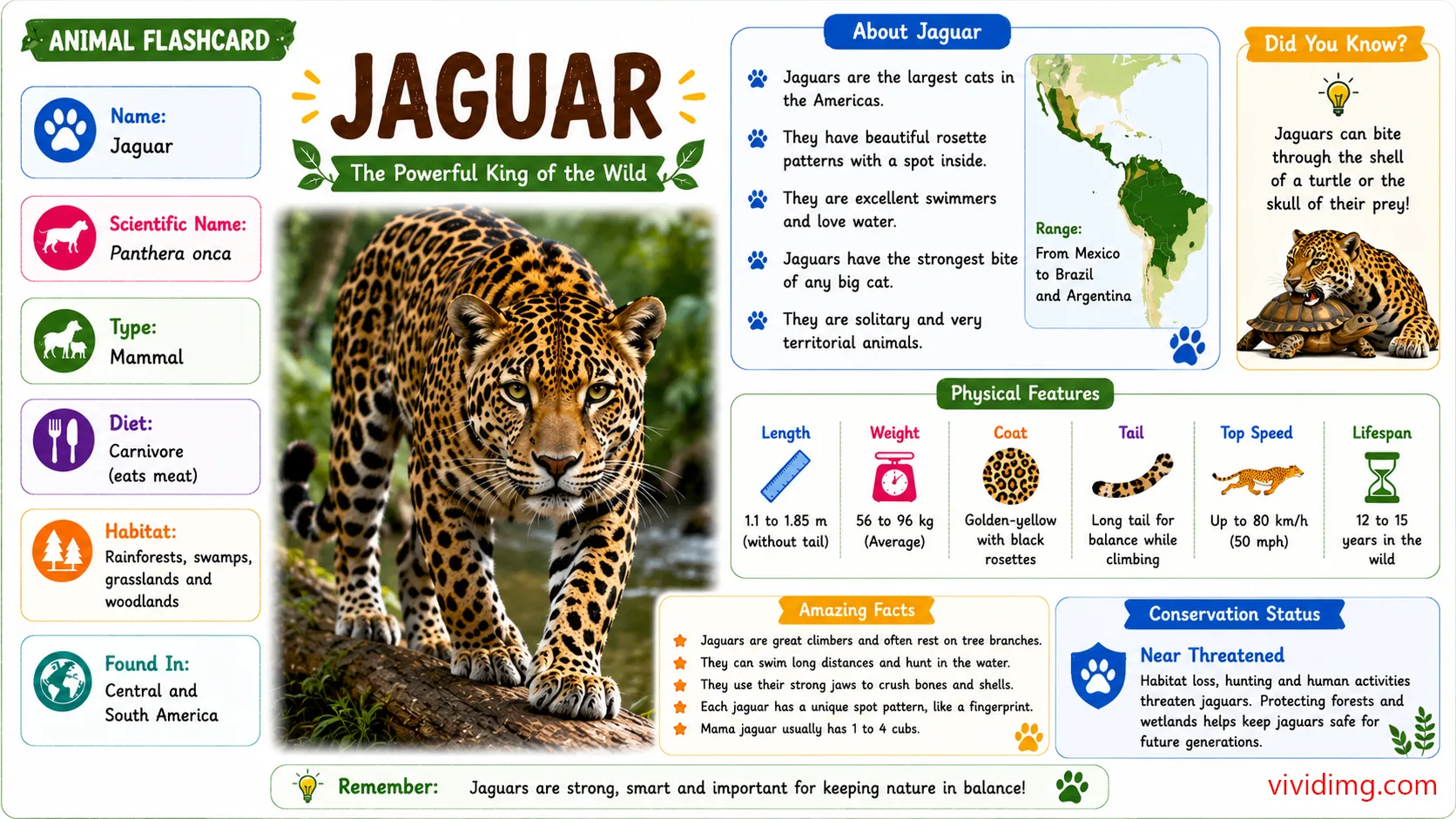
The jaguar is the largest cat native to the Americas and is known for its muscular body and beautiful spotted coat. Jaguars live in habitats that include tropical forests, wetlands and grasslands, with major populations found in Central and South America.
A jaguar's coat contains distinctive markings called rosettes. Unlike the rosettes of a leopard, many jaguar rosettes contain small spots inside them. Jaguars are powerful predators and unusually comfortable around water compared with many other cats. They can swim well and hunt a wide variety of prey. Their exceptionally strong bite is another feature that distinguishes them from many other big cats.
4. Leopard facts for kids
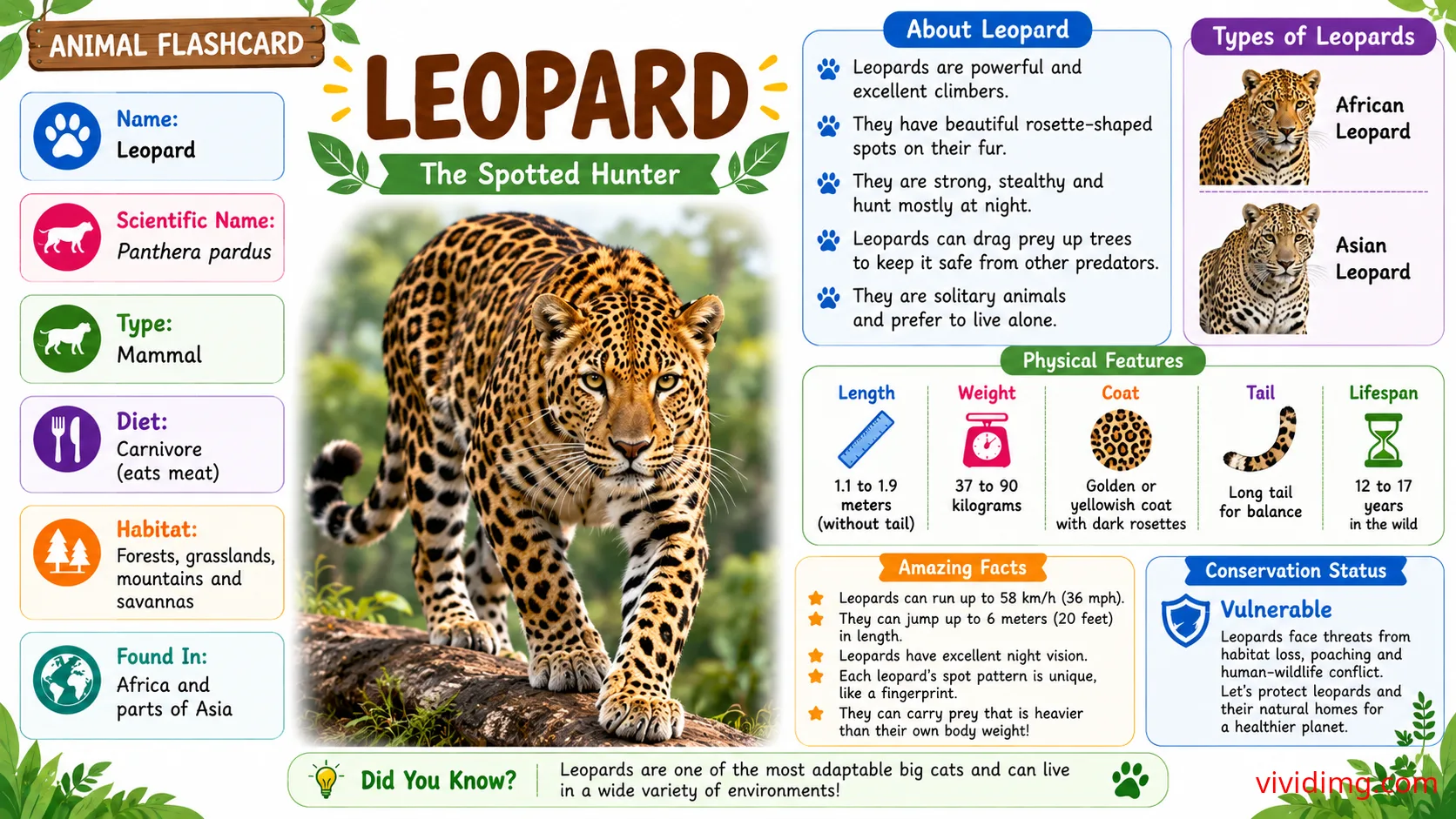
Leopards are adaptable big cats found across parts of Africa and Asia. Their golden coats covered with dark rosette-shaped markings provide excellent camouflage in many environments, helping them remain difficult to spot despite their wide distribution.
Leopards are skilled climbers and are often associated with trees. Their strong bodies allow them to climb while carrying prey, helping protect a meal from other animals in some habitats. Leopards are generally solitary and can live in environments ranging from forests and grasslands to mountainous regions. Comparing a leopard with a jaguar is a fun activity for children because the two animals look similar but have important differences.
5. Cheetah facts for kids
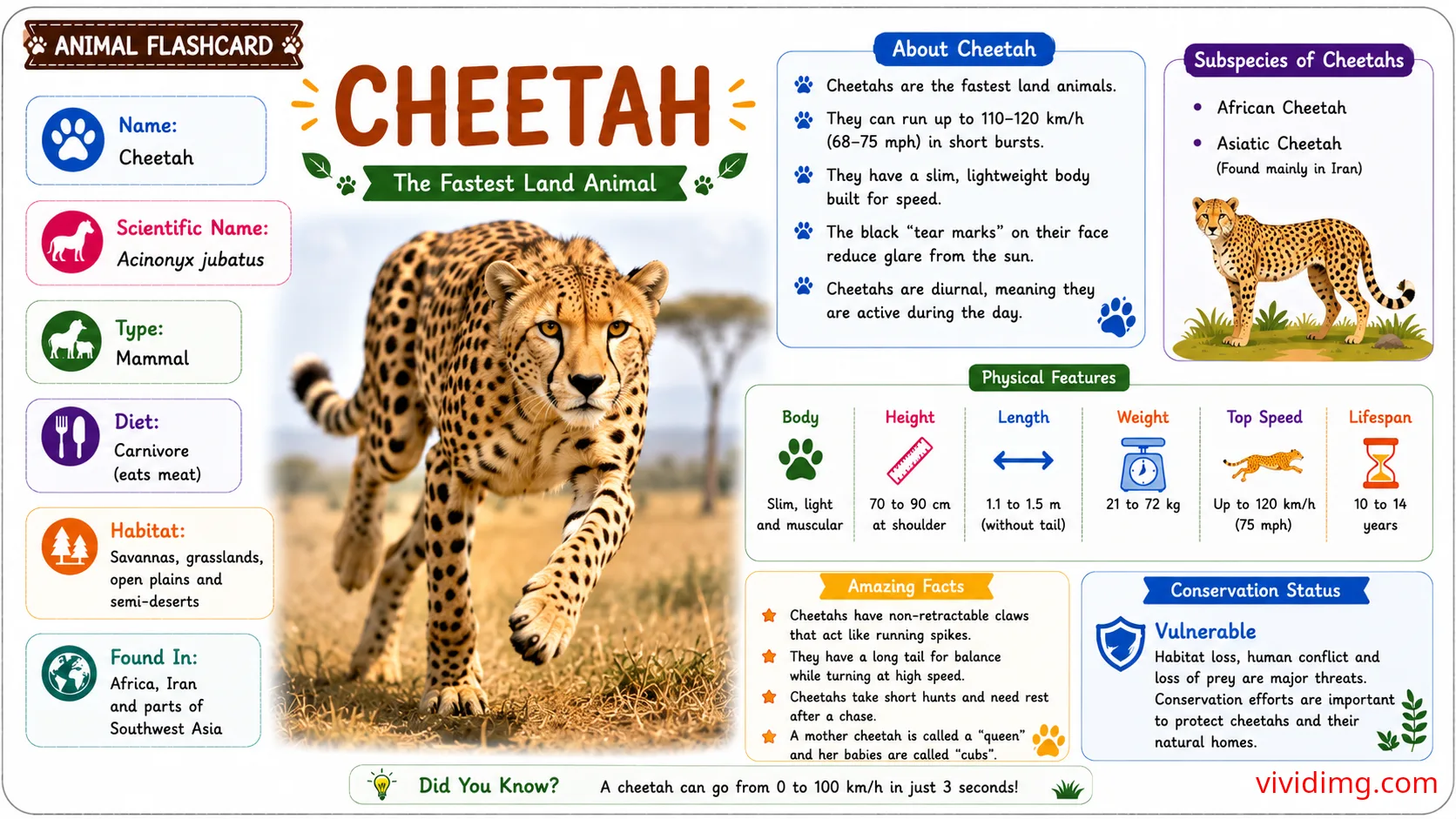
The cheetah is famous for speed. It is the fastest land animal and has a body specially adapted for rapid acceleration and high-speed chases over short distances. Its long legs, flexible spine, lightweight body and long tail all contribute to its remarkable running ability.
Cheetahs also have distinctive solid black spots and dark tear-like markings running from their eyes toward their mouths. Unlike lions and tigers, cheetahs cannot produce the same type of powerful roar. Their hunting strategy depends heavily on eyesight, acceleration and speed. This makes the cheetah an excellent example for teaching children how an animal's body can be adapted to its lifestyle.
6. Zebra facts for kids
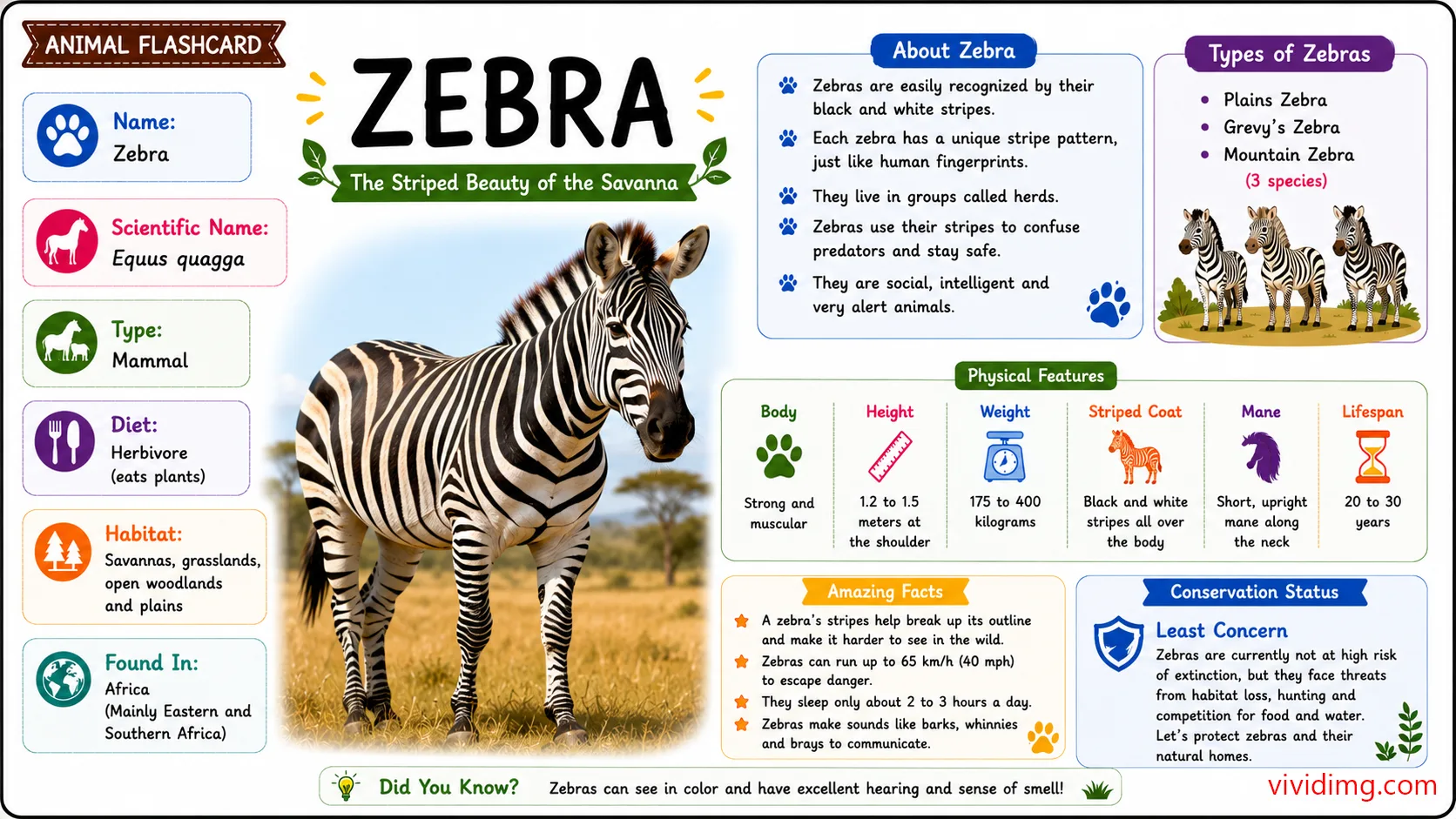
Zebras are African members of the horse family and are immediately recognizable because of their black-and-white striped coats. Every zebra has its own stripe pattern, giving each animal an individually recognizable appearance.
Zebras are herbivores that mainly feed on grasses. They commonly live in social groups and rely on awareness, speed and group behavior to help protect themselves from predators. Their stripes have fascinated scientists for many years, and research suggests they can serve several functions, including helping reduce biting-fly landings. Zebras are a great subject for introducing children to patterns, adaptation and herd behavior.
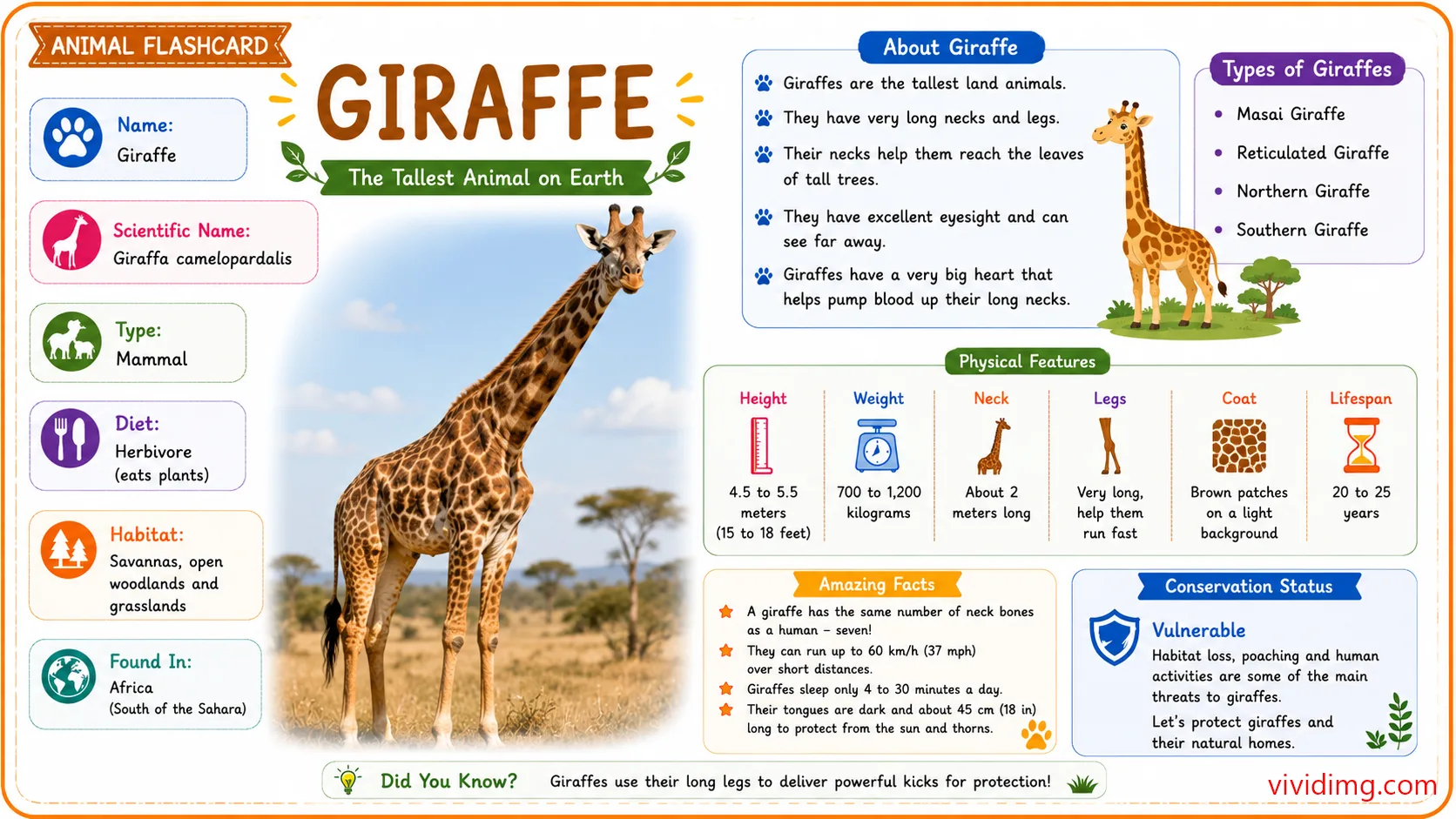
7. Giraffe facts for kids
The giraffe is the tallest living land animal. Its extremely long neck and legs allow it to reach leaves high in trees that many other herbivores cannot easily access. Giraffes are native to Africa and live in environments including savannas, woodlands and open grasslands.
One of the most fascinating giraffe facts is that its long neck still contains seven neck vertebrae, the same number typically found in most mammals, including humans. Giraffes also have long tongues that help them grasp leaves and feed among thorny branches. Their patterned coats vary among individuals and populations, making them visually distinctive as well as remarkably tall.
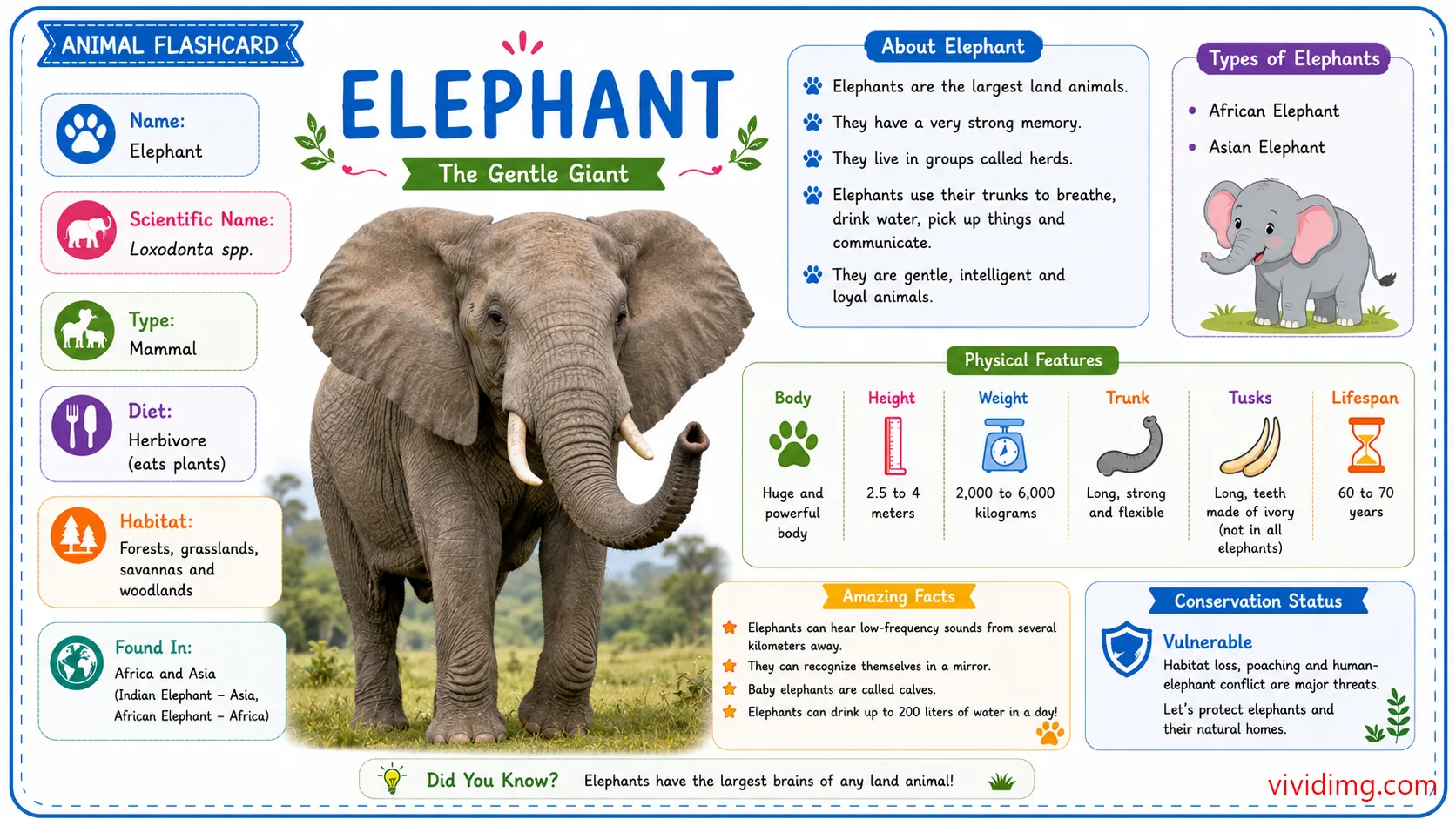
8. Elephant facts for kids
Elephants are the largest living land animals and are well known for their trunks, large ears and impressive intelligence. Living elephant species occur naturally in Africa and Asia, with physical differences helping distinguish African and Asian elephants.
An elephant's trunk is an extraordinary multipurpose organ. Elephants use it for smelling, breathing, touching, grasping objects, collecting food and drawing up water. Elephants are highly social and can form strong family relationships. They communicate using touch, body movements and a wide range of sounds, including low-frequency calls that can travel considerable distances.
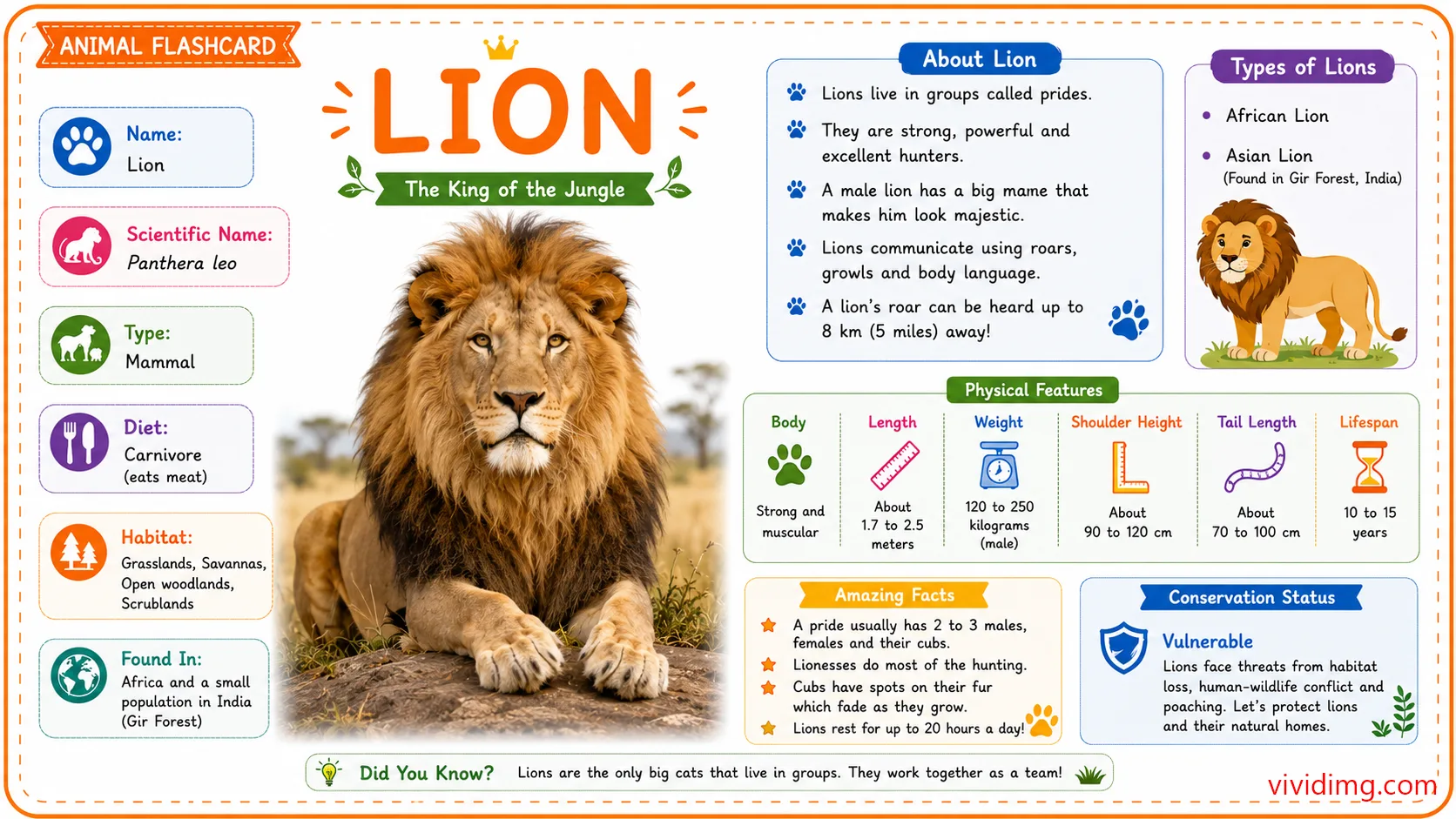
9. Lion facts for kids
Lions are powerful big cats best known for their social lifestyle. Unlike most wild cat species, lions commonly live in groups called prides. A pride can include related females, their young and one or more adult males.
Adult male lions are often recognizable by their manes, although mane size and appearance vary. Lions are carnivores and hunt animals such as antelope and zebra. They spend a considerable amount of time resting and become more active during cooler periods. Their social organization makes lions especially interesting when comparing the behavior of different big cats.
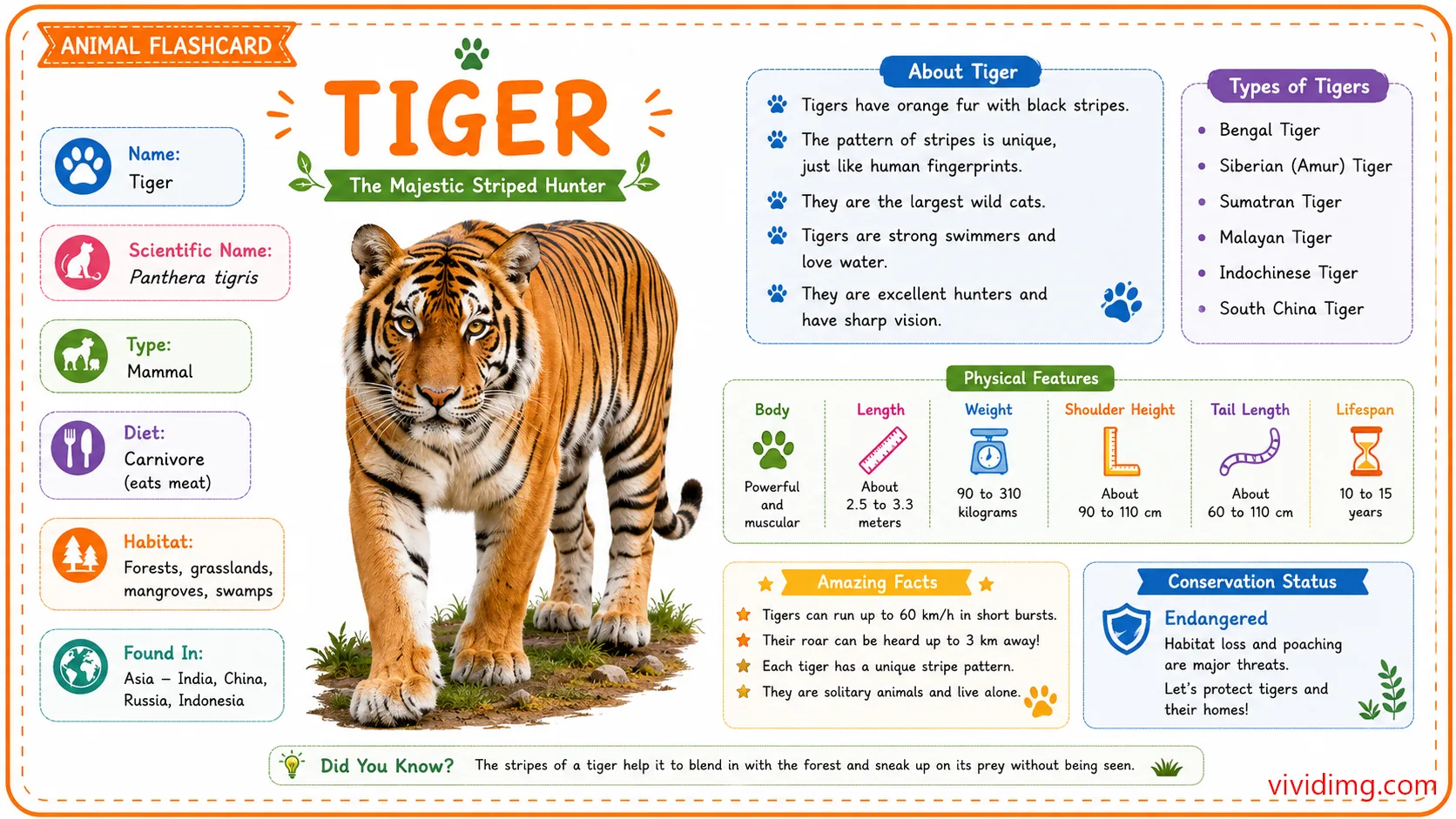
10. Tiger facts for kids
The tiger is the largest living cat species and one of the world's most recognizable wild animals. Its orange coat, dark vertical stripes and powerful build provide an unmistakable appearance. Tigers are native to Asia and occupy different habitats depending on the population, including forests, grasslands and wetlands.
Just like human fingerprints, stripe patterns differ between individual tigers. Tigers are generally solitary animals and use their strength, stealth and camouflage while hunting. They are also capable swimmers and may readily enter water. Learning about tigers gives children an opportunity to explore predators, camouflage, habitats and the importance of protecting threatened wildlife.
What children can learn from animal flashcards
Animal flashcards can do more than teach children the names of animals. Each animal provides an opportunity to explore broader ideas such as habitat, diet, body structure, adaptation, behavior and relationships within an ecosystem.
For example, children can compare the cheetah's body with the much heavier rhinoceros, investigate why giraffes have long necks, compare a jaguar with a leopard or discuss why zebras live differently from solitary tigers. These comparisons encourage observation and reasoning rather than simple memorization.
- Builds animal vocabulary and general knowledge.
- Helps children identify and compare wild animals.
- Introduces habitats, diets and animal behavior.
- Encourages observation and visual memory.
- Introduces concepts such as predators, herbivores and adaptations.
- Creates opportunities to discuss wildlife conservation.
- Supports classroom, homeschool and project-based learning.
Big cats – can you spot the differences?
This collection contains four fascinating members of the cat family: jaguar, leopard, cheetah and lion, along with the tiger. Asking children to compare them can become an engaging learning activity. The cheetah has solid spots and a slender body built for speed, while leopards and jaguars have rosette-shaped markings. Lions stand apart because of their social pride structure, and tigers are easily recognized by their vertical stripes.
Rather than simply telling children the answer, show two flashcards together and ask them what differences they notice. Questions based on observation can turn a collection of images into an interactive science lesson.
Ideas for parents and teachers
Start by showing a flashcard without immediately explaining every fact. Ask the child to name the animal and describe what they notice. Does it have spots or stripes? Is it likely to eat plants or other animals? Does its body suggest that it runs quickly, climbs trees or carries heavy weight?
After discussing the animal, introduce its habitat, diet and special characteristics. Older children can compare two animals and explain how their bodies suit different environments. Younger learners can focus on simpler concepts such as names, colors, patterns and food.
You can also turn the collection into a guessing game. Describe an animal without saying its name: 'I am the fastest land animal and have black spots.' The child identifies the cheetah. Or ask: 'I am the tallest land animal and use my long neck to reach leaves.' This type of recall activity makes learning playful and memorable.
Explore the wild world one animal at a time
From the enormous elephant and towering giraffe to the speedy cheetah and powerful tiger, every animal has a different story to tell. Their bodies, behaviors and habitats have developed in ways that help them survive in their environments.
These educational animal flashcards give children a visual starting point for discovering those stories. Use them for classroom lessons, homework, homeschooling, wildlife projects or simply for a fun learning session at home. One animal can easily lead to ten new questions, and those questions are often where the best learning begins.