Science becomes much more interesting when children can see what they are learning. A colorful diagram can turn an unfamiliar idea into a visual story, helping young learners understand parts, stages, sequences and relationships without depending entirely on memorization.
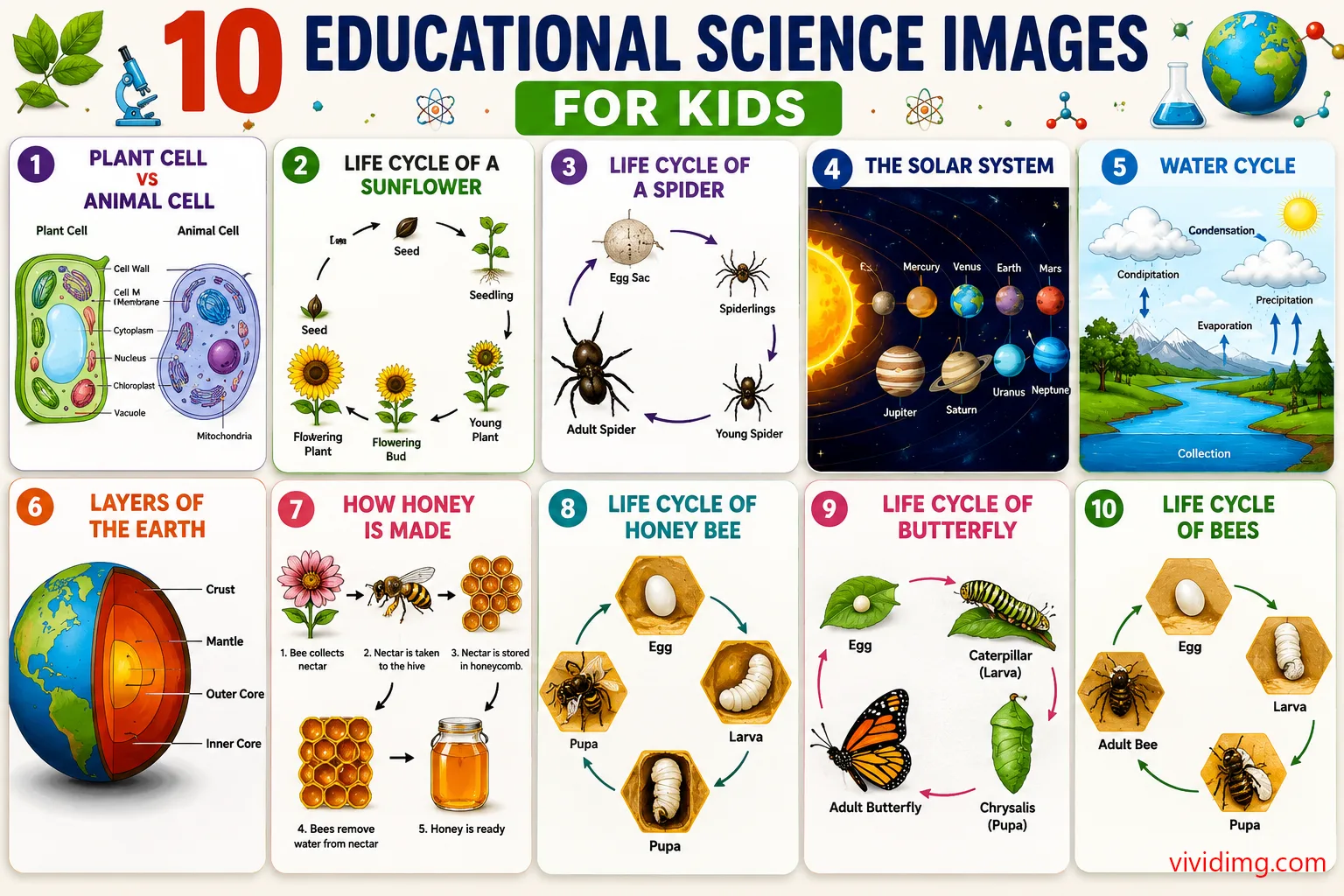
This collection brings together 10 educational science images covering biology, nature, Earth science and space. Children can compare plant and animal cells, follow a sunflower from seed to flower, discover how spiders, butterflies and bees develop, understand how honey is produced, follow water around our planet, look inside the Earth and explore the Solar System.
These visual resources are suitable for primary school learning, homeschooling, classroom explanations, science projects, homework and revision. Parents and teachers can use each image as the starting point for a discussion rather than simply asking children to remember a list of facts.
1. Plant cell vs animal cell – understanding the key differences
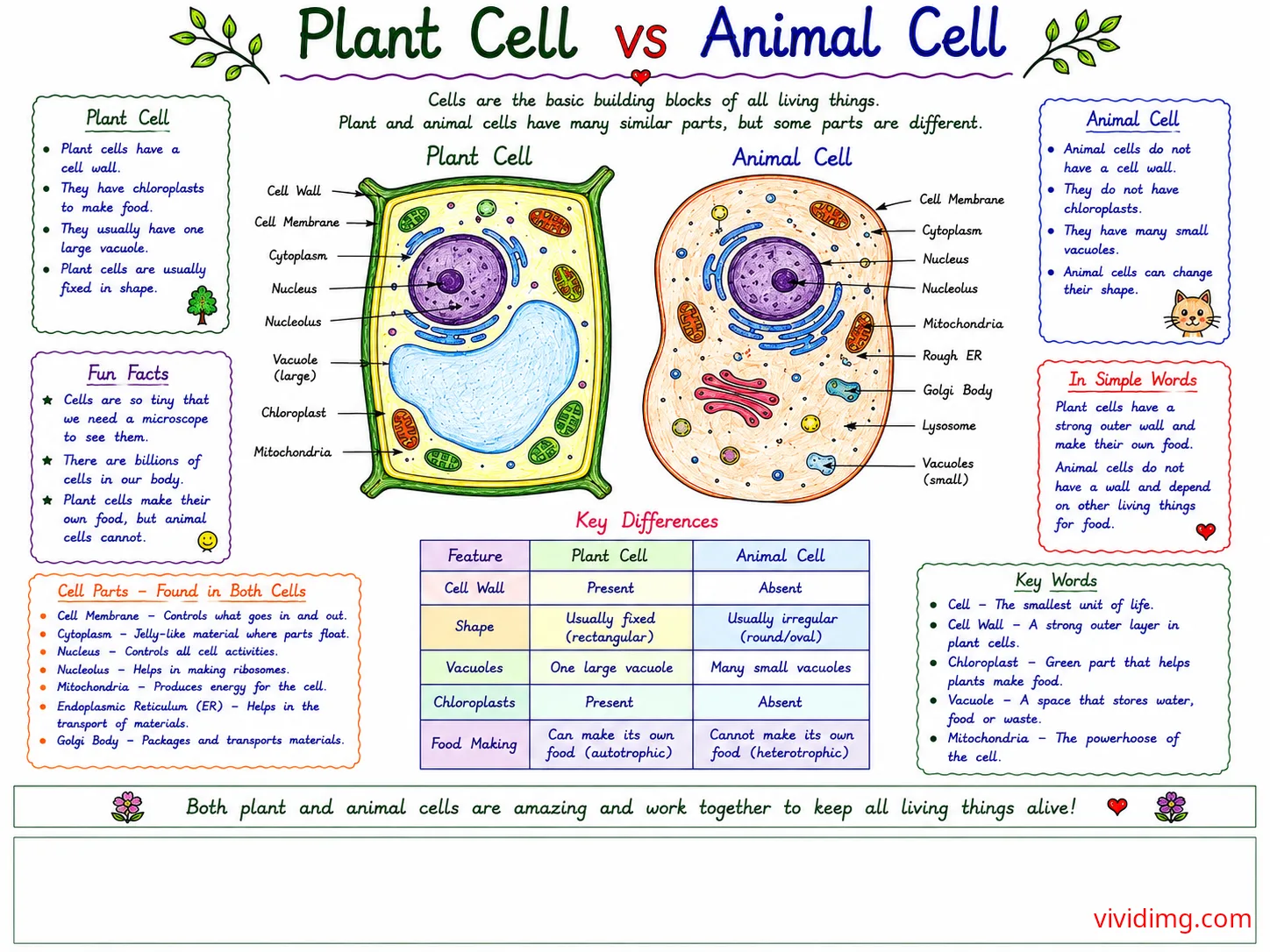
Plants and animals may look completely different, but both are made of cells. Plant and animal cells share several important structures, including a cell membrane, cytoplasm, nucleus and mitochondria. These parts perform essential jobs that help cells survive and function.
Plant cells also contain structures that distinguish them from typical animal cells. A rigid cell wall provides additional support, chloroplasts help capture light energy for photosynthesis, and a large central vacuole commonly occupies much of the cell's interior. Animal cells do not have cell walls or chloroplasts and generally have a more flexible shape.
Viewing plant and animal cells side by side makes comparison easier. Children can identify structures found in both cells before looking for the features unique to plants, turning a potentially complicated biology lesson into a simple observation activity.
2. Life cycle of a sunflower – from seed to beautiful flower
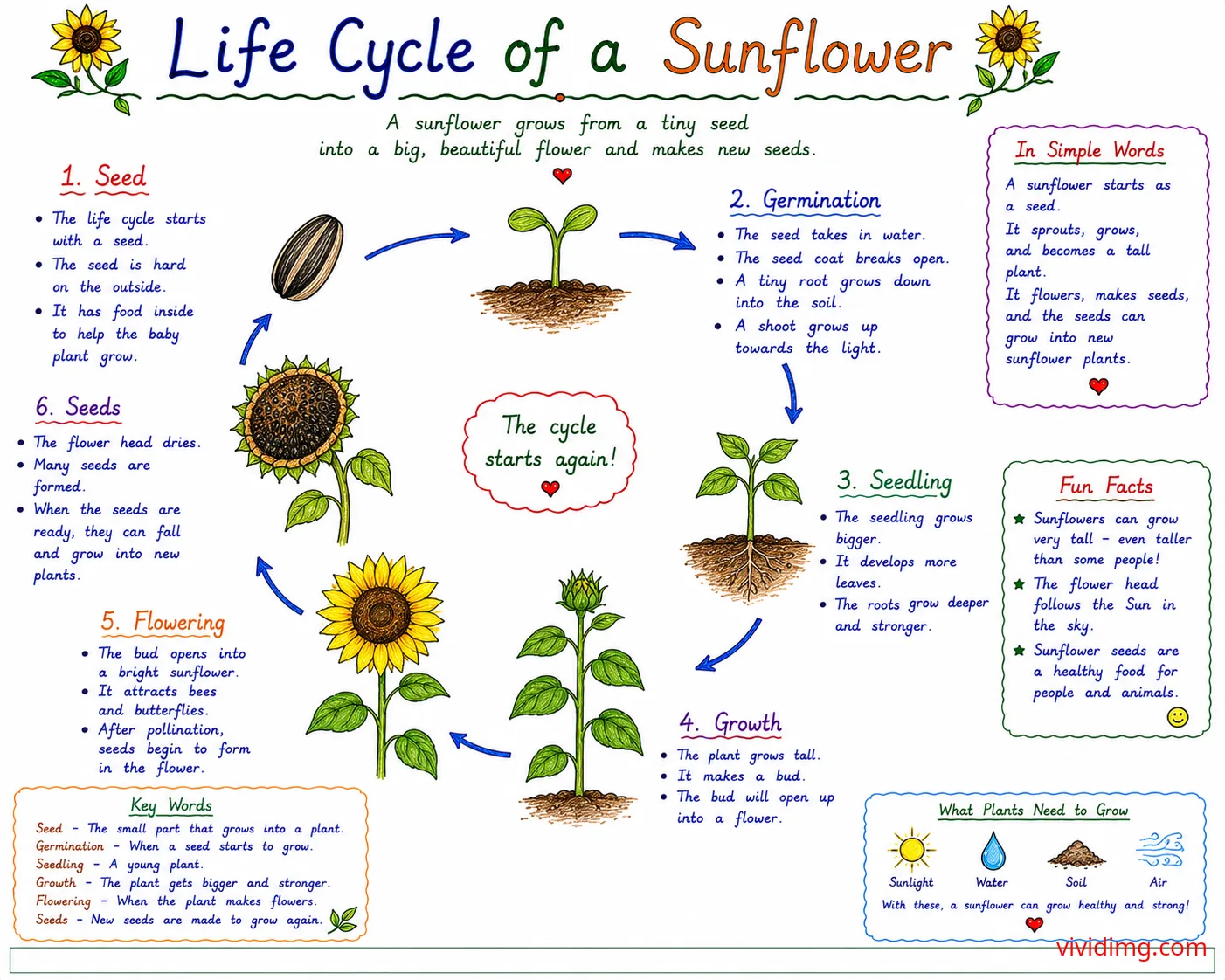
Every towering sunflower begins as a small seed. When a seed receives suitable moisture, warmth and growing conditions, germination begins. A root emerges and grows into the soil while a young shoot starts moving upward toward the light.
The seedling develops leaves and a stronger stem. Using sunlight, water, carbon dioxide and nutrients, it continues to grow until a flower bud forms. The bud eventually opens into the familiar yellow sunflower. A mature flower can produce new seeds, allowing another generation of plants to begin.
This life-cycle image helps children understand that plants are constantly changing living organisms. It also introduces concepts such as germination, seedlings, plant growth, flowering and seed production.
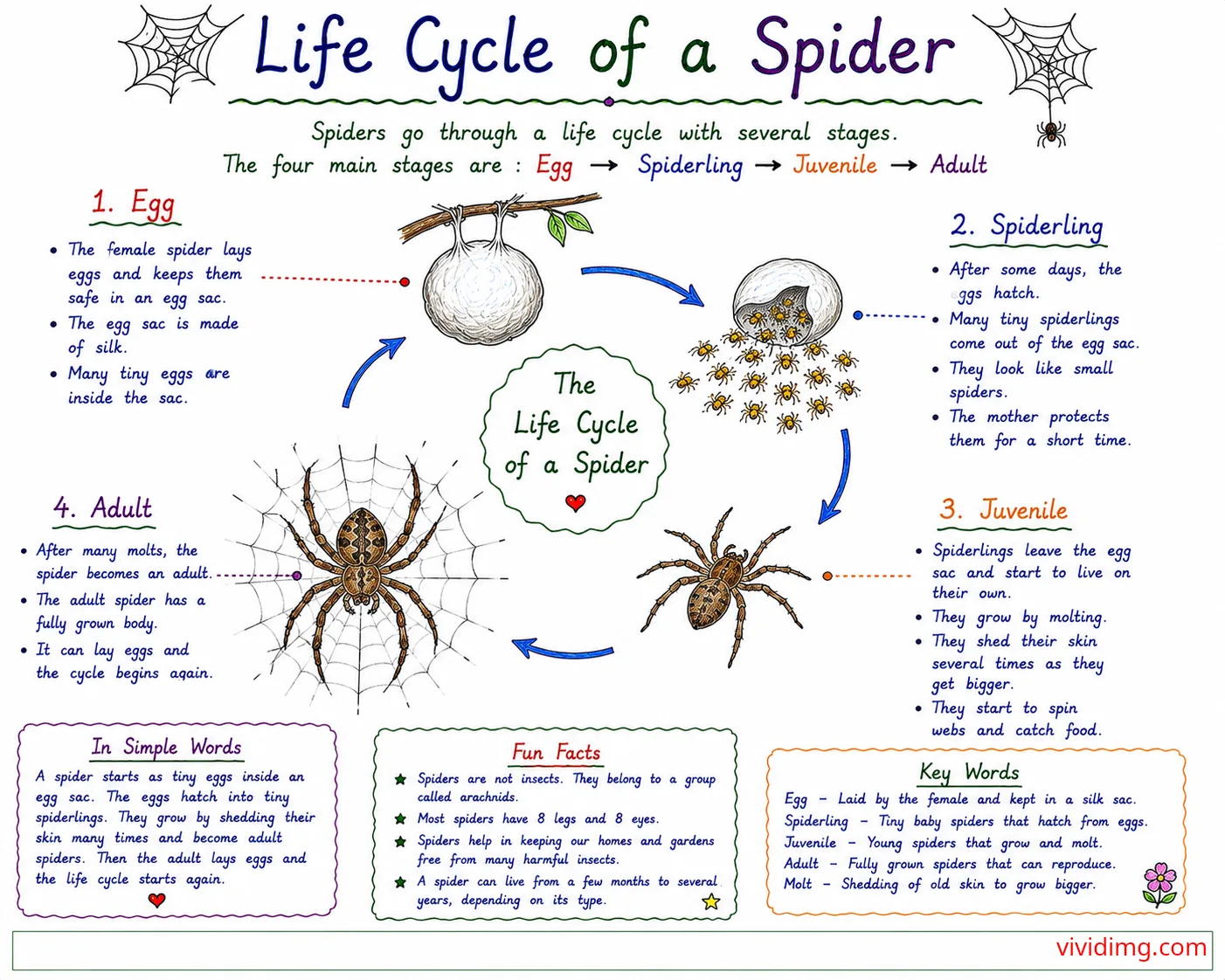
3. Life cycle of a spider – from egg sac to adult spider
A spider's life begins inside an egg. Female spiders usually lay multiple eggs and protect them inside silk egg sacs. Depending on the species, an egg sac may be hidden, attached to a web or carried by the mother.
Young spiders called spiderlings emerge from the eggs. They often resemble miniature adult spiders, but they must continue growing before reaching maturity. Because their external skeleton cannot continuously expand with their body, spiders molt as they grow.
Following the stages from egg to spiderling and eventually adult spider gives children an interesting comparison with insects that undergo complete metamorphosis.
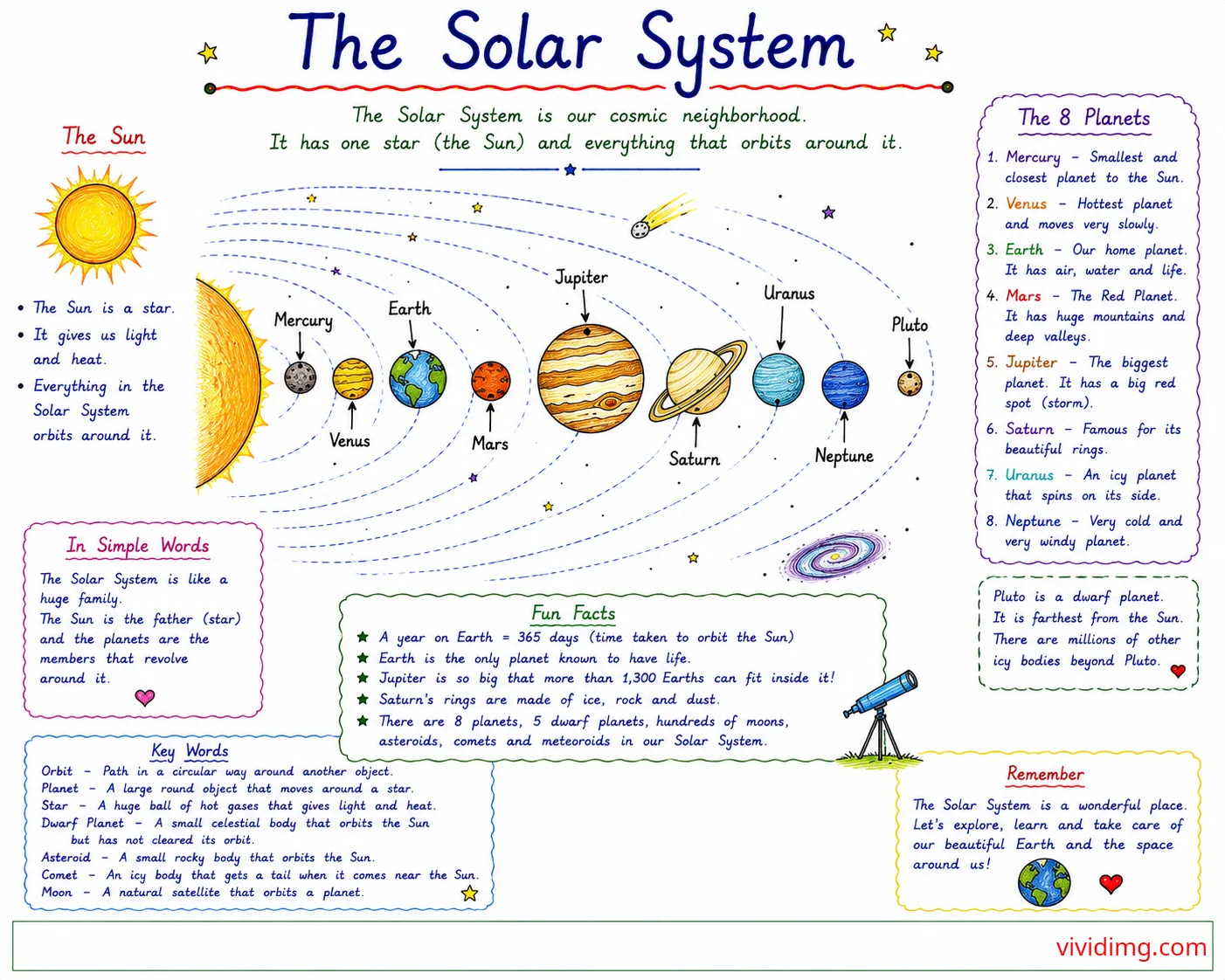
4. The Solar System – exploring our cosmic neighborhood
Our Solar System contains the Sun and the many objects held within its gravitational influence. Eight planets orbit the Sun: Mercury, Venus, Earth, Mars, Jupiter, Saturn, Uranus and Neptune.
The four inner planets are rocky worlds, while the four outer planets are much larger gas or ice giants. The Solar System also contains moons, dwarf planets, asteroids, comets and countless smaller objects.
A visual representation makes the order of the planets easier for children to remember while opening the door to bigger questions. Why is Mars red? Why does Saturn have such noticeable rings? How large is Jupiter compared with Earth? Science often becomes exciting when one diagram produces many new questions.
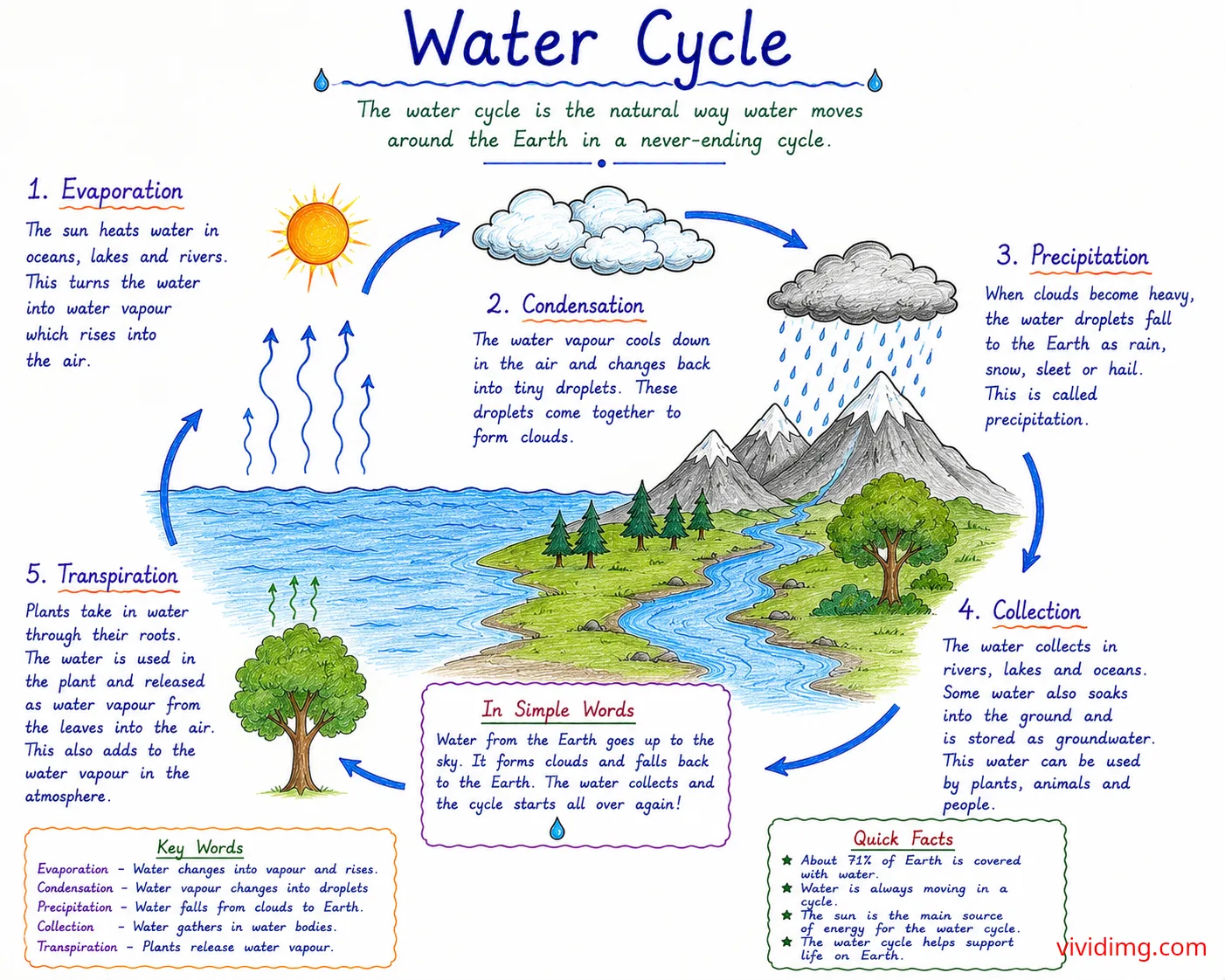
5. Water cycle – how water moves around the Earth
Water is continuously moving between Earth's surface and atmosphere through the water cycle. Heat from the Sun causes liquid water to evaporate from oceans, lakes, rivers and other surfaces. Water vapor rises and eventually cools.
Cooling water vapor condenses into tiny droplets that contribute to cloud formation. When enough water accumulates, precipitation returns it to the surface as rain, snow or other forms. Water collects in oceans, rivers, lakes, soil and underground sources before continuing through the cycle.
Seeing evaporation, condensation, precipitation and collection together helps children understand that these are connected parts of one continuous natural system.
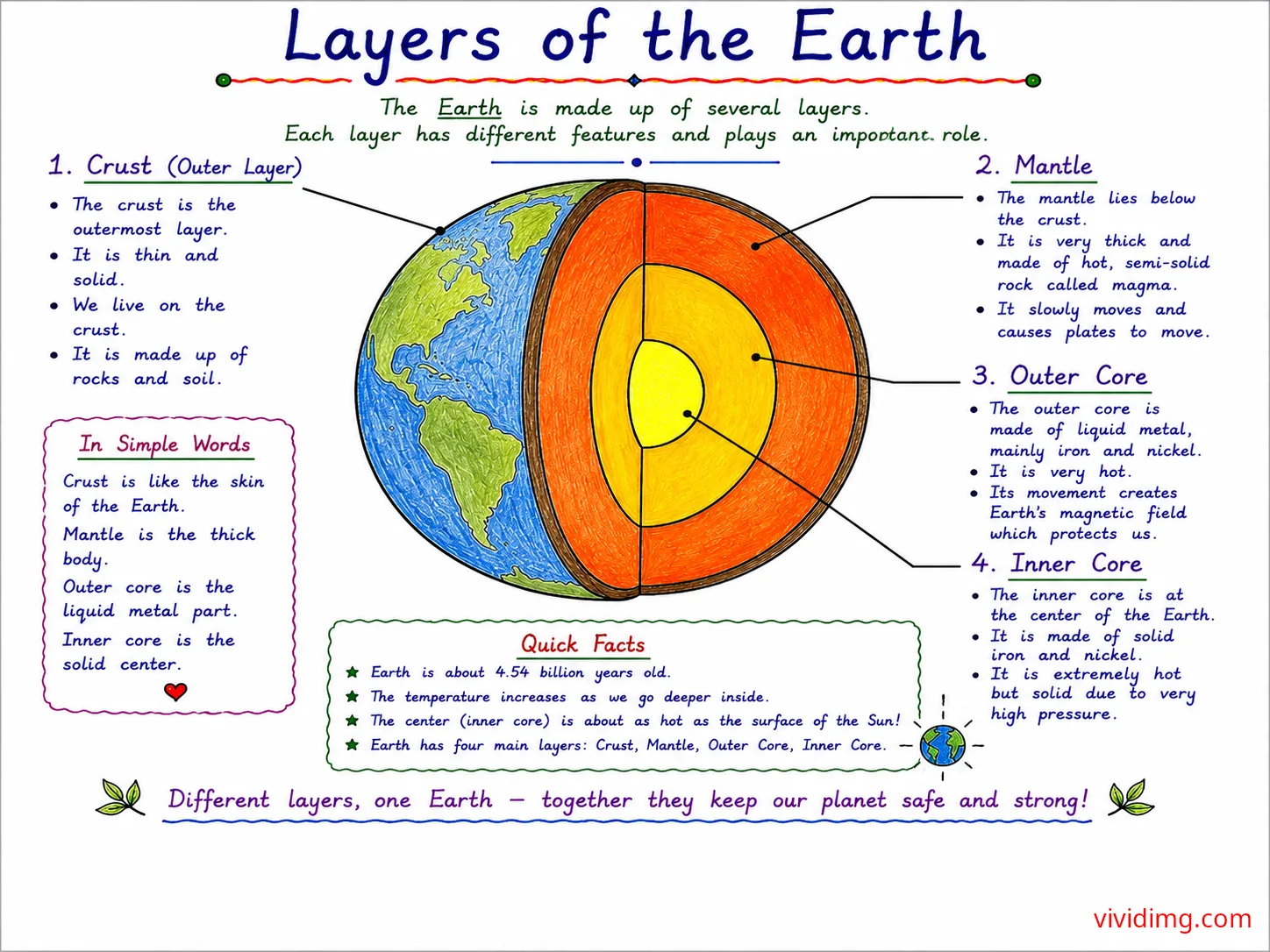
6. Layers of the Earth – what lies beneath our feet?
Earth is far more than the surface we can see. Its internal structure is commonly described using four major layers: the crust, mantle, outer core and inner core.
The crust is the comparatively thin outer layer where we live. Beneath it lies the much thicker mantle. Deeper inside is the liquid outer core, followed by the extremely hot and dense solid inner core at the planet's center.
A cross-sectional Earth diagram allows children to visualize structures they could never directly observe. It also provides a foundation for future lessons about volcanoes, earthquakes, rocks, plate tectonics and Earth's magnetic field.
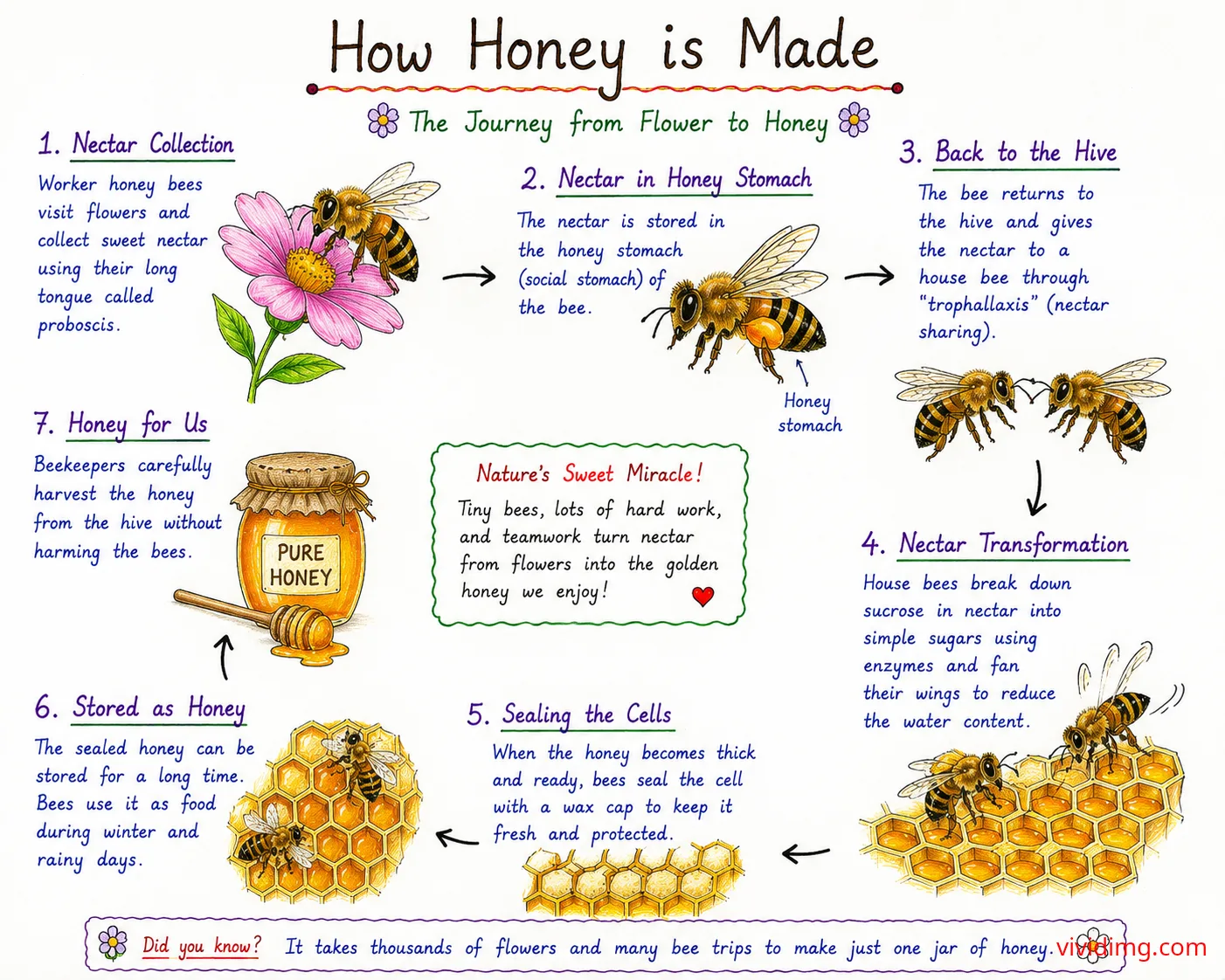
7. How honey is made – from flower nectar to honey
The journey of honey begins when worker honey bees visit flowers and collect nectar. The nectar is transported back toward the colony while enzymes begin changing its composition.
Inside the hive, nectar is transferred and deposited into honeycomb cells. Bees help reduce its water content, including by circulating air across the comb with their wings. As moisture decreases, the nectar becomes increasingly concentrated and develops into honey. Once sufficiently ripened, the cells can be sealed with wax for storage.
This process connects several science topics in one story: flowering plants, insects, food production, pollination and ecosystems. It also demonstrates just how organized and remarkable the life of a honey bee colony can be.
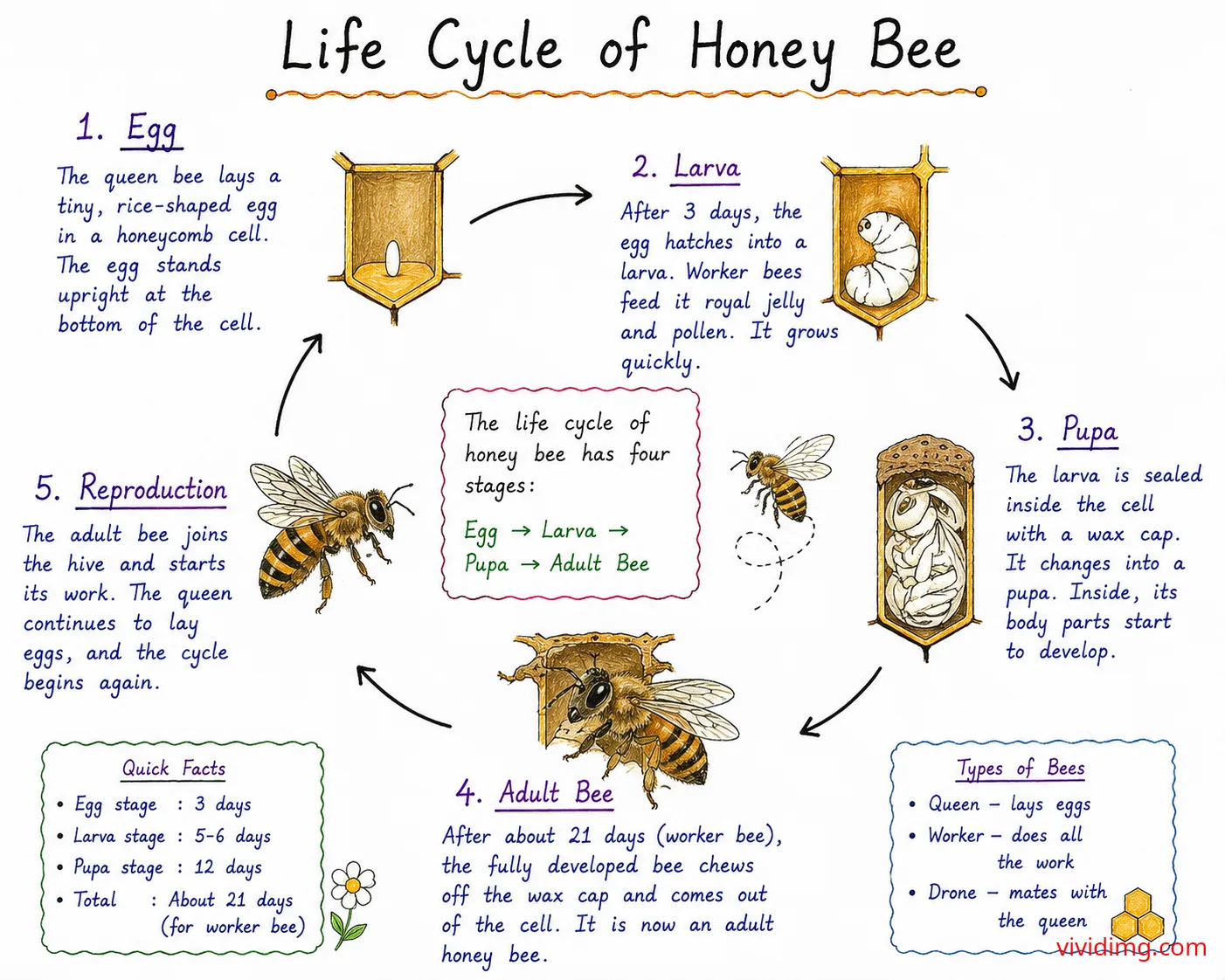
8. Life cycle of a honey bee – egg, larva, pupa and adult
Honey bees develop through complete metamorphosis. The process begins when the queen lays an egg inside a honeycomb cell. The egg hatches into a larva, which is fed and cared for by worker bees.
After the larval growth period, the cell is capped and the developing bee enters its pupal stage. Major changes take place during this period until the recognizable adult bee has formed. The adult eventually emerges from the cell and begins participating in colony life.
The four main stages – egg, larva, pupa and adult – make honey bees an excellent example for teaching children about complete metamorphosis.
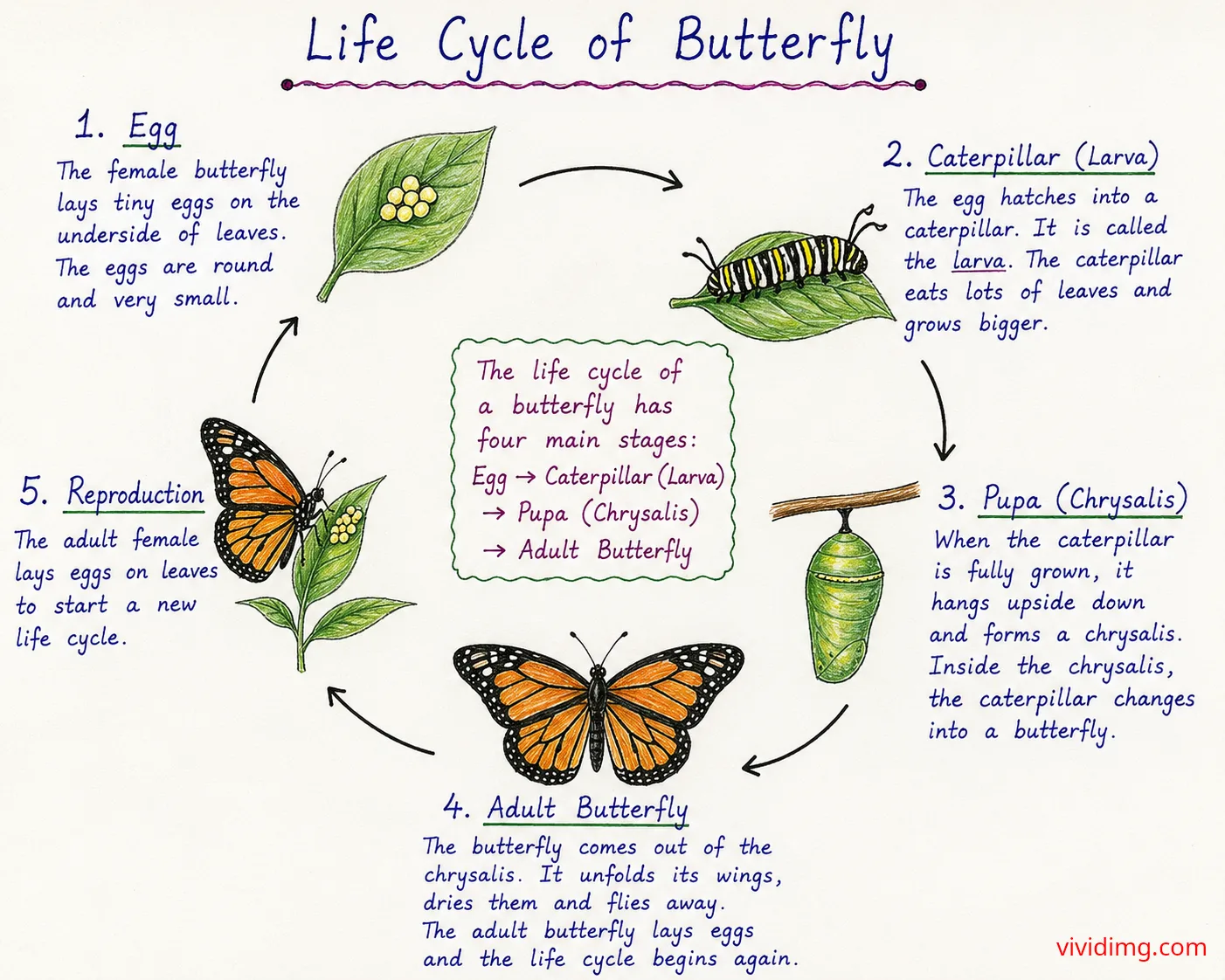
9. Life cycle of a butterfly – complete metamorphosis
The butterfly life cycle is one of the clearest examples of dramatic change in nature. An adult butterfly begins the next generation by laying eggs, often on plants that can provide food for the young caterpillars.
A caterpillar, or larva, emerges and spends much of its time feeding and growing. Later it forms a chrysalis and enters the pupal stage. Inside, an extraordinary transformation occurs before an adult butterfly finally emerges.
Children can compare the butterfly's egg, larva, pupa and adult stages with those of the honey bee. Although the adults look very different, both insects undergo complete metamorphosis.
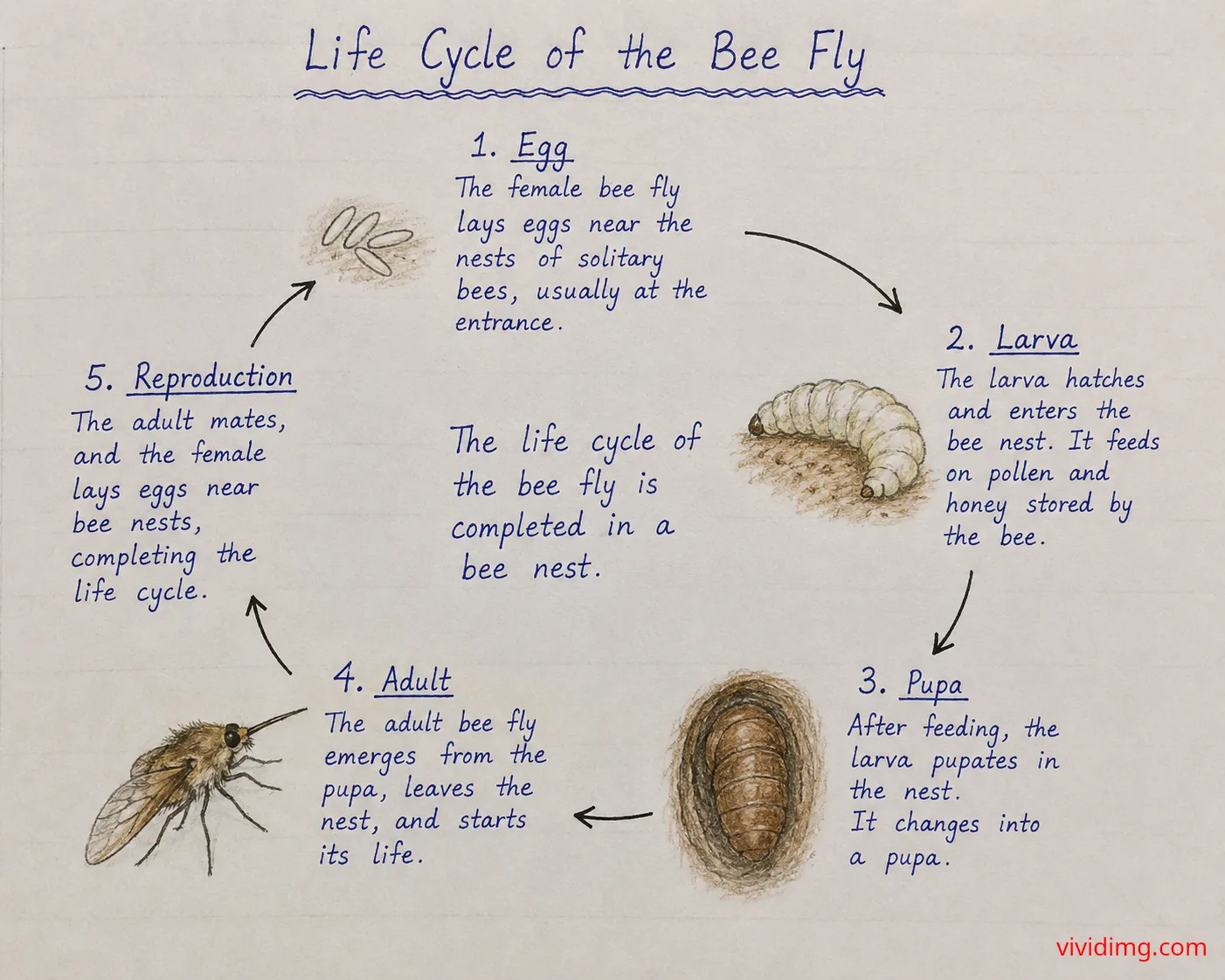
10. Life cycle of bees – understanding the complete stages
The bee life cycle gives children another opportunity to understand how insects grow and transform. The sequence progresses through egg, larva, pupa and adult, with significant changes occurring between each stage.
Rather than treating these stages as four words to memorize, children can follow the visual sequence and explain what changes from one stage to another. Comparing the bee cycle with butterflies or even the spider life cycle can also encourage observation and scientific reasoning.
Why visual science learning helps children
Many science topics involve structures that are too small to see, places that are impossible to visit directly or processes that take too long to watch from beginning to end. We cannot see cell organelles with our eyes, travel through Earth's internal layers or casually observe every moment of an insect's development.
Educational diagrams bring these ideas into a format children can explore at a glance. They allow young learners to compare, sequence, label and connect information while providing a visual reference they can return to during revision.
- Makes complex science topics easier to understand.
- Helps children recognize stages and sequences.
- Supports observation and visual memory.
- Introduces scientific vocabulary in context.
- Encourages comparison and logical thinking.
- Supports classroom lessons, homework and projects.
- Works well for homeschooling and independent learning.
Discover the connections between these topics
The most interesting part of this collection is that many of its subjects are connected. A sunflower is made of plant cells, and those cells contain chloroplasts that help the plant use light energy. The sunflower needs water, connecting plant growth directly with the water cycle.
Flowering plants provide nectar for honey bees. Bees collect that nectar to make honey while also playing an important role in pollination. Butterflies also depend on plants during their life cycles. All these organisms live on Earth, whose crust is only the outermost part of a layered planet orbiting the Sun.
Showing children these relationships can make science feel less like a collection of separate chapters and more like a connected story about life, Earth and the universe.
Ideas for parents and teachers
Start with observation before explanation. Show a child one image and ask what they notice. With a life cycle, ask which stage they think comes first. With plant and animal cells, ask them to find structures that appear in both diagrams. With the Solar System, ask them to locate Earth before introducing the remaining planets.
Comparison activities are especially useful. Ask children how butterfly and bee life cycles are similar, how plant and animal cells differ or how sunlight connects plant growth with the water cycle. These questions encourage children to think about relationships rather than simply repeat facts.
Children can also redraw diagrams, create labels, explain a process in their own words or teach a topic back to a parent, teacher or classmate. When a child can explain an idea clearly, it is a strong sign that they have moved beyond memorization toward genuine understanding.
Explore science one image at a time
From microscopic cells to the enormous Solar System, science helps children understand both the smallest structures of life and the largest objects around us. Between those extremes are plants growing, insects transforming, water circulating and our dynamic planet beneath our feet.
Use these 10 educational science images for classroom lessons, homeschooling, projects, homework, revision or simple curiosity-driven learning. One clear image can answer a question, but more importantly, it can inspire the next one.